
Petroleum Stains Require Heat and Chemistry
Oil Removal Pressure Washing in Melbourne for engine oil, hydraulic fluid, and kitchen grease that cold water cannot lift from porous surfaces
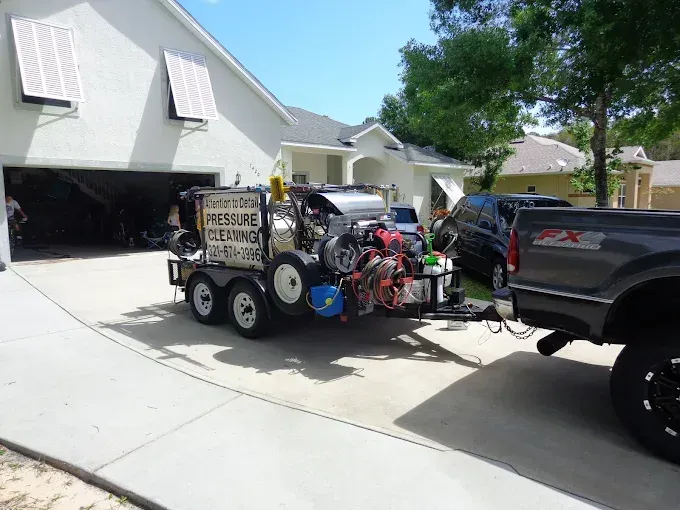
Cold-water washing spreads oil across concrete rather than removing it because water alone cannot break the molecular bonds that petroleum forms with porous aggregate and calcium compounds. High-heat commercial extraction combined with specialized degreasers targets the specific chemistry of motor oil, hydraulic fluid, diesel, and kitchen grease, dissolving the bond at the molecular level before extraction pulls contaminated solution out of the surface. Attention To Detail Space Coast uses this approach for oil removal pressure washing in Melbourne, addressing both fresh drips and set-in stains that have darkened driveways, parking pads, and dumpster areas over months or years.
The process involves pre-treating the stained area with commercial-grade degreasers formulated for petroleum chemistry, then applying heated water at temperatures high enough to liquefy oil that has hardened or bonded into concrete pores. Pressure extraction follows immediately, removing the dissolved contaminant before it re-bonds as the surface cools. This sequence matters because skipping the heat or degreaser step leaves a faint shadow even after aggressive scrubbing.
Request a site assessment to identify oil penetration depth and determine the extraction method required for your surface type.
What Proper Oil Extraction Requires
Petroleum bonds chemically with concrete aggregate within hours of initial contact, which is why fresh oil drips respond to single-pass extraction while set-in stains from years of vehicle leaks require extended dwell time and multiple treatment cycles. The degreaser must remain on the surface long enough to penetrate the full depth of contamination, then the heated water needs sufficient contact time to raise the oil above its solidification point before extraction begins.
Once oil removal completes, driveways and parking pads return to uniform color without dark streaks or patches where vehicles were parked. Surfaces lose the slick film that causes shoes to slide during rain, and concrete stops attracting additional dirt to oily areas that previously created permanent-looking shadows. Kitchen exhaust zones, dumpster pads, and loading areas no longer emit the rancid odor that develops when grease oxidizes in Florida heat.
Oil removal also prevents the progression from surface staining to structural degradation, which occurs when petroleum penetrates deep enough to interfere with the binding agents in concrete, causing surface spalling and aggregate exposure over time. Addressing stains before they reach that depth extends pavement life and avoids costly resurfacing requirements.
Answers to Frequent Service Questions
Property owners dealing with oil stains often ask about treatment methods, surface compatibility, and what results to expect based on stain age and contamination severity.
How does heated water remove oil when cold water cannot?
Heating the water above 180 degrees Fahrenheit liquefies hardened petroleum and accelerates the chemical reaction between degreaser and oil, allowing the contaminant to be flushed out of porous concrete instead of remaining bonded to aggregate surfaces.
What types of oil stains respond to pressure washing?
Fresh engine oil, motor oil drips, red hydraulic fluid, diesel and gasoline spills, and heavy kitchen grease all respond to hot-water extraction, while set-in stains from years of accumulation may require additional chemical treatment or multiple sessions depending on penetration depth.
Can oil removal damage concrete or asphalt surfaces?
Commercial extraction equipment and pH-balanced degreasers are calibrated for concrete and asphalt compatibility, avoiding the surface etching that occurs with harsh solvents or excessive pressure that strips away the top layer of pavement along with the stain.
Why do some oil stains return after washing?
If cold water was used or the degreaser did not penetrate the full depth of contamination, residual oil remains in the lower pores and migrates back to the surface as the concrete dries, which is why Melbourne's heat and humidity reveal incomplete extraction within days of treatment.
What maintenance prevents oil stains from setting permanently?
Addressing fresh spills within 24 hours using absorbent materials and scheduling hot-water extraction before the oil chemically bonds prevents the progression from surface contamination to deep-set discoloration that requires aggressive remediation.
Attention To Detail Space Coast handles oil removal pressure washing for driveways, parking areas, and commercial pads throughout Melbourne using heated extraction methods that address petroleum chemistry directly. Contact us to schedule oil stain evaluation and treatment based on contamination depth and surface condition.